How Palliser Reshaped Capricorn: From Cash Discount and Boardroom Battle to a Takeover Premium

Genel Energy has announced a recommended cash offer for Capricorn Energy, valuing the company at approximately $360 million on a fully diluted basis. Shareholders have been offered $4.74 per share, comprising $3.75 in cash from Genel and a $0.99 special dividend from Capricorn. The total package is worth 357p per share, a 34% premium to Capricorn’s closing share price on 10 March 2026, the day before the start of the offer period.
If the Genel offer completes, it will mark the final act in Palliser Capital’s involvement with Capricorn. The London-based activist investment firm first built a position in Capricorn after it had recovered more than $1 billion from the Indian government in a tax dispute and was facing a fundamental question over what to do with the money. Palliser would go on to become one of Capricorn’s largest shareholders and lead a successful campaign against the company’s strategy and board.
The Capricorn board at the time sought to split the opportunity between shareholders and the future of the company, proposing a $500 million special dividend, together with a share-buyback programme of up to $200 million, while retaining substantial financial capacity to expand and diversify the company through further investment and acquisitions.
For Palliser, the attraction was the combination of a large cash position and the discount at which Capricorn was trading. The risk was what might happen to that cash. By the summer of 2022, the company’s market value was around $835 million, while its balance sheet held $809 million of gross and $631 million of net cash. The market was therefore attributing relatively little value to Capricorn’s Egyptian producing business and contingent receivables, reflecting concern over how the cash might ultimately be used.
For Palliser to capture that value, it would first have to overcome the appetite of the Capricorn board, as then constituted, for further acquisitions. A conflict was brewing and it was not long before it came to the fore. As the board began pursuing major transactions, the disagreement developed into an increasingly public confrontation over whether the value already accumulated inside Capricorn would be realised for existing shareholders or redeployed through corporate expansion.
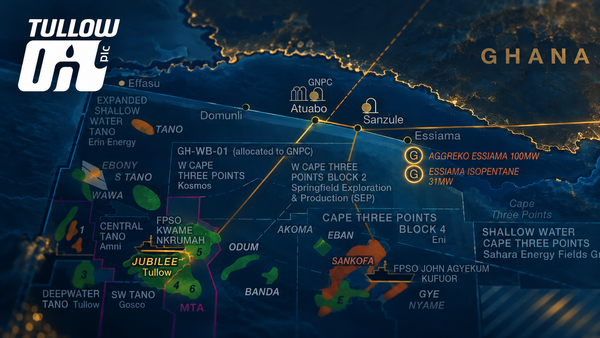
Capricorn first proposed a merger with Tullow Oil. Palliser objected strongly, describing the transaction as a “poorly disguised nil-premium takeover of Capricorn by Tullow” and arguing that it failed properly to recognise the value of Capricorn’s cash, assets and contingent value for existing shareholders.
When the Tullow deal was abandoned, the board moved almost immediately to a proposed combination with NewMed Energy. Palliser objected again, and by then the disagreement had become much broader than opposition to one particular deal. The argument was increasingly about the future direction of Capricorn and whether the company should build-out as a independent E&P platform.
Palliser’s position was not that Capricorn should never take part in M&A, but that the company should not burn through its cash pursuing larger corporate structures or transactions that failed properly to recognise the value already belonging to Capricorn shareholders. The campaign eventually led to a substantial board overhaul, the abandonment of the NewMed transaction and a programme of large cash returns.
The new strategy became harvest mode. Capricorn was simplified around its Egyptian business. Costs were reduced, exploration interests were rationalised and the focus shifted to improving cash collections, strengthening the commercial terms of the remaining assets and returning value to shareholders, rather than using the balance sheet to build another broad international E&P portfolio.
Four years later and the endgame has arrived. Palliser opposed what it regarded as a nil-premium takeover of Capricorn in 2022 but has now swung its support behind the Genel offer. The reason becomes understandable when the numbers are considered, even on an indicative basis.
Palliser built its physical share position for, very roughly, £40 million and has received, again very roughly, £40 million in cash distributions on those shares. It still owns 9,758,433 Capricorn shares, worth approximately £34.8 million at the 357p value of the Genel offer.
On that basis, Palliser has already recovered an amount broadly equivalent to the estimated cost of its physical share investment through cash distributions, while the remaining holding is now subject to a recommended offer worth 357p per share, comprising the cash consideration from Genel and the Capricorn special dividend. The combined cash already received and value of the offer package is approximately £70.7 million, before taking account of the derivative positions that formed part of Palliser’s wider economic exposure but cannot be valued reliably from public information.
The exact numbers are less important than the investment thesis they illustrate. Palliser invested in a company where substantial value was already visible, but where the market was discounting the risk that cash would be consumed by corporate expansion. It then acted to protect that value, opposed transactions it believed would destroy it, helped force a change in strategy and remained invested while cash was returned and the remaining business was improved. The Genel offer now provides the logical final step: an exit at a premium after the original activist investment thesis has largely played out.
The timing of the offer is also important. Capricorn collected $217 million in outstanding receivables from Egypt during 2025, leaving $86 million outstanding at the end of the year. The receivables problem, common among E&P companies operating in Egypt, must have weighed heavily on both the investment case and Palliser’s eventual exit strategy. Its recent substantial improvement therefore removed a major barrier to a corporate sale.
Progress was also made on the contractual framework for the Egyptian business. Capricorn’s merged Western Desert concession agreement was ratified and formally brought into effect during the first half of 2026, providing the remaining company with a clearer long-term framework for investment and cash generation.
The Genel offer therefore comes after much of the work needed to realise Capricorn’s value has already been completed. Cash has been returned, the company has been simplified, the receivables position has improved substantially and the principal Egyptian assets now sit within an improved contractual framework.
For an activist investor, a recommended cash offer at a premium represents the logical endgame. Palliser has fought to maximise the value realised from Capricorn’s cash and assets, and its remaining position can now be converted into cash through a takeover at a premium. The capital can then be recycled into another opportunity where Palliser believes a similar gap exists between market price, underlying value and board strategy.
There are some broader lessons in the story. One important lesson, and one I have seen many times before, is that a healthy cash balance does not automatically receive full value from the market. Investors also have to believe that the cash will be used in a way that creates value for them. Capricorn’s position in 2022 was an unusually clear example. A company with gross cash almost equal to its entire market value still traded at a substantial discount because investors were uncertain about what would happen next. That is one reason activist situations can emerge when a company has a large cash position. The concern is that G&A will erode the cash or that it will be spent on acquisitions that fail to generate attractive returns.
Capricorn also shows that activism is often about sequencing rather than simply forcing an immediate sale. Palliser did not arrive and demand that the company be sold at once. It opposed two transactions, helped force a change in the board, supported large cash returns and remained invested while the remaining Egyptian business was simplified and improved. It also accepted substantial risk around the receivables position, which was later largely resolved but is often a thorn in the side of E&P businesses operating in Egypt. Only after that sequence did the final offer emerge.
There is also a lesson about M&A. Palliser opposed a transaction it described as a nil-premium takeover and is now supporting a cash offer at a premium. The two positions are entirely consistent. The issue was never whether Capricorn should participate in a transaction, but whether the terms properly compensated shareholders for what they already owned.
The same point applies more widely across the upstream industry. Corporate transactions are often justified through scale, diversification, synergies or strategic logic, but shareholders still have to ask what they are contributing, what they are receiving and whether the exchange improves the value of their existing investment.
For Palliser, the Genel offer is the logical conclusion of its original thesis and involvement with Capricorn. It identified a deeply discounted company, challenged the proposed use of its cash, opposed two major transactions, helped force a board change, supported cash returns and retained exposure while the remaining business was improved. The final step is now a possible exit through a recommended takeover at a premium.
For Capricorn, however, the Genel offer is only the latest stage in a much longer story. To understand why the company had more than $1 billion to argue over in the first place, why its board believed it could build again and why the disagreement with shareholders became so intense, it is necessary to go back more than 20 years. For a board and management team, the instinct to use cash to build is common and understandable.
The company Genel is now offering to buy is the surviving corporate entity of one of the most remarkable British independent oil company stories of the past three decades. The history of Cairn is outside the scope of this piece, but it is in itself a fascinating story and a related cautionary tale.